CTO Hiring in Healthcare: Why Demand Is Surging in 2026
Healthcare technology is in the middle of a generational infrastructure overhaul. Every health system, digital health startup, and health tech company needs a CTO who understands both engineering and the regulatory landscape. The talent pool hasn't caught up.
Healthcare CTO hiring is up 47% year-over-year based on ExecSignals tracking data. That number isn't noise. Three structural forces are driving it, and none of them are cyclical. Recruiters who understand the healthcare CTO landscape now will own this niche for the next decade.
Force 1: AI Is Hitting Clinical Workflows
The AI wave reached healthcare in 2024 and accelerated through 2025. By 2026, every major health system is running or piloting AI in at least one clinical area: radiology image analysis, clinical documentation, predictive diagnostics, or operational scheduling.
This creates a CTO problem. Most health system technology leaders came up through IT operations. They manage EHR systems, network infrastructure, and cybersecurity. They did not build machine learning pipelines. They have not deployed real-time inference models in production. And now their boards and medical officers are asking them to.
Companies like Tempus, Viz.ai, and Google Health set the bar for what healthcare AI engineering looks like. Their CTOs combine deep ML expertise with an understanding of clinical validation requirements, FDA software device regulations, and the slow, deliberate pace at which hospitals adopt new technology. That combination is rare.
Force 2: Cloud Migration at Health Systems
Hospital systems are five to ten years behind other industries in cloud adoption. The reasons are well-documented: HIPAA compliance concerns, massive legacy system investments (Epic alone costs $500M+ for a large health system implementation), and risk-averse IT cultures shaped by patient safety mandates.
But the dam is breaking. Cloud costs have dropped to the point where on-premise infrastructure is the more expensive option. AWS, Azure, and Google Cloud all have HIPAA-compliant offerings with BAA coverage. And the staffing costs of maintaining on-premise data centers are unsustainable when every other industry is competing for the same infrastructure engineers.
Health systems like CommonSpirit Health, HCA Healthcare, and Kaiser Permanente are hiring or replacing CTOs specifically to lead cloud transformation. These searches are often the first time a health system has hired a CTO with deep cloud-native engineering experience rather than promoting from within the IT organization.
Force 3: Digital Health Companies Reaching Scale
The digital health companies that survived the 2023-2024 funding contraction are now scaling. Companies like Hims & Hers, Cerebral, and dozens of Series B-C companies in telehealth, remote monitoring, and clinical decision support are hitting the growth stage where the founding VP Engineering needs to level up or be replaced by a CTO.
This is a pattern ExecSignals sees across industries, but it's especially pronounced in digital health because the technical complexity compounds at scale. A telehealth platform serving 10,000 patients has different engineering requirements than one serving 500,000. Add in multi-state licensure requirements, insurance integrations, and clinical data pipelines, and the CTO role becomes hard to fill.
Compensation Benchmarks
Healthcare CTO compensation varies dramatically by organization type. Recruiters need to know all three tiers to set candidate expectations correctly.
Health Tech Startups (Series B-C)
Base salary: $250K-$350K. Equity: 0.5-1.5% with standard 4-year vesting. Total package: $400K-$700K on paper. The equity component is the draw. Candidates from big tech take a cash haircut for the equity upside and the chance to build something from the architecture level.
Health Systems and Hospital Networks
Base salary: $250K-$350K. Bonus: 15-30% of base. No equity. Total cash: $300K-$450K. Benefits are typically strong (healthcare organizations offer their own insurance products) and the work-life balance is often better than startup roles. The trade-off is slower decision-making, legacy system constraints, and a bureaucratic culture that frustrates candidates from fast-moving tech companies.
Late-Stage and Public Digital Health
Base salary: $300K-$400K. RSU grants: $200K-$500K annually. Total: $500K-$900K. Companies like Veeva Systems and Doximity set the high end of this range. These roles attract candidates from FAANG companies who want the compensation floor of big tech with the mission alignment of healthcare.
The Skills That Matter Most
Healthcare CTO searches fail when clients and recruiters focus on generic technical leadership skills. The differentiators are healthcare-specific.
HIPAA and security architecture. Not "awareness of HIPAA." Hands-on experience designing systems that process PHI at scale. The CTO needs to have built or overseen audit logging, encryption at rest and in transit, access controls, and breach response protocols. Ask candidates to describe their last HIPAA audit experience in detail.
Interoperability standards. HL7 FHIR is the current standard for healthcare data exchange. A healthcare CTO who hasn't worked with FHIR APIs will spend their first six months learning what they should have known on day one. Check for direct experience building or consuming FHIR endpoints.
FDA software regulation. If the product touches clinical decision-making, it may fall under FDA Software as a Medical Device (SaMD) regulations. The CTO needs to understand quality management systems, design controls, and the 510(k) clearance process. This is a binary qualification: they either have it or they don't. You can't learn FDA compliance on the job.
EHR integration experience. Epic and Oracle Health (formerly Cerner) dominate the hospital EHR market. Any health tech product that sells to hospitals needs to integrate with one or both. CTOs who have built Epic MyChart integrations or worked with Epic's App Orchard marketplace have a concrete advantage.
Sourcing Strategy for Healthcare CTOs
The candidate pool is small. Here's where to look.
Digital health alumni networks. Start with former engineering leaders from companies that scaled successfully: Veeva, Flatiron Health (acquired by Roche), Livongo (merged with Teladoc), Zocdoc, Athenahealth. These companies trained a generation of healthcare technologists. Many are now ready for CTO roles at the next wave of companies.
Health system innovation labs. Major health systems like Mayo Clinic, Cleveland Clinic, and Mount Sinai run internal innovation and technology teams. The leaders of these groups understand healthcare deeply and have built production systems. They often want to move to the private sector for better compensation and faster execution pace.
Adjacent regulated industries. Biotech, pharmaceutical, and medical device companies employ engineering leaders who understand FDA regulations and clinical data requirements. The transition to health tech CTO is shorter than from general SaaS. Illumina, Roche, and similar companies are good sourcing grounds.
Avoid over-indexing on big tech. A VP Engineering from Google or Amazon who has never worked in healthcare will face a 6-12 month learning curve on regulatory requirements, clinical workflows, and the pace at which healthcare organizations adopt technology. That learning curve often leads to early-tenure frustration for both the executive and the company.
Geographic Patterns
Boston leads healthcare CTO hiring, driven by the concentration of biotech, digital health startups, and major hospital systems (Mass General Brigham, Beth Israel). San Francisco is second, with the digital health startup ecosystem. Nashville is the emerging third market, anchored by HCA Healthcare and the city's growing health tech cluster.
Remote is more common for healthcare CTOs than you might expect. 24% of healthcare CTO postings in Q1 2026 were remote or hybrid, higher than the 17% average for all VP+ roles. The technical nature of the work (architecture, code review, system design) translates better to remote than client-facing executive roles.
One compliance consideration that trips up healthcare CTO searches: HIPAA security officer responsibilities. In many health tech companies, the CTO serves as the de facto security officer responsible for PHI protection. Candidates with direct HIPAA compliance experience command a 10-15% compensation premium over those who need to learn the regulatory framework on the job. Screen for this early if your client handles protected health information.
The interoperability mandate from ONC (21st Century Cures Act) is creating a new wave of CTO demand focused specifically on API strategy and data exchange. Health systems that have historically run closed systems now need CTOs who can build open APIs and manage data partnerships. This is a different skill set than traditional health IT leadership, and it narrows the candidate pool significantly.
Healthcare CTO Hiring: What Recruiters Should Do Now
Build a shortlist of 20 health systems and 30 health tech companies in your geography. Track their engineering job postings monthly. When you see a pattern (5+ engineering hires in 60 days, or a new VP Engineering posting), the CTO conversation is 3-6 months away.
The Office of the National Coordinator for Health IT (ONC) publishes updates on healthcare interoperability mandates that directly create CTO demand. Recruiters who can reference these mandates in client conversations demonstrate domain expertise that wins retained engagements. The American Hospital Association data on technology adoption rates provides additional context for market sizing.
Browse healthcare industry data or CTO role intelligence for more context on this market.
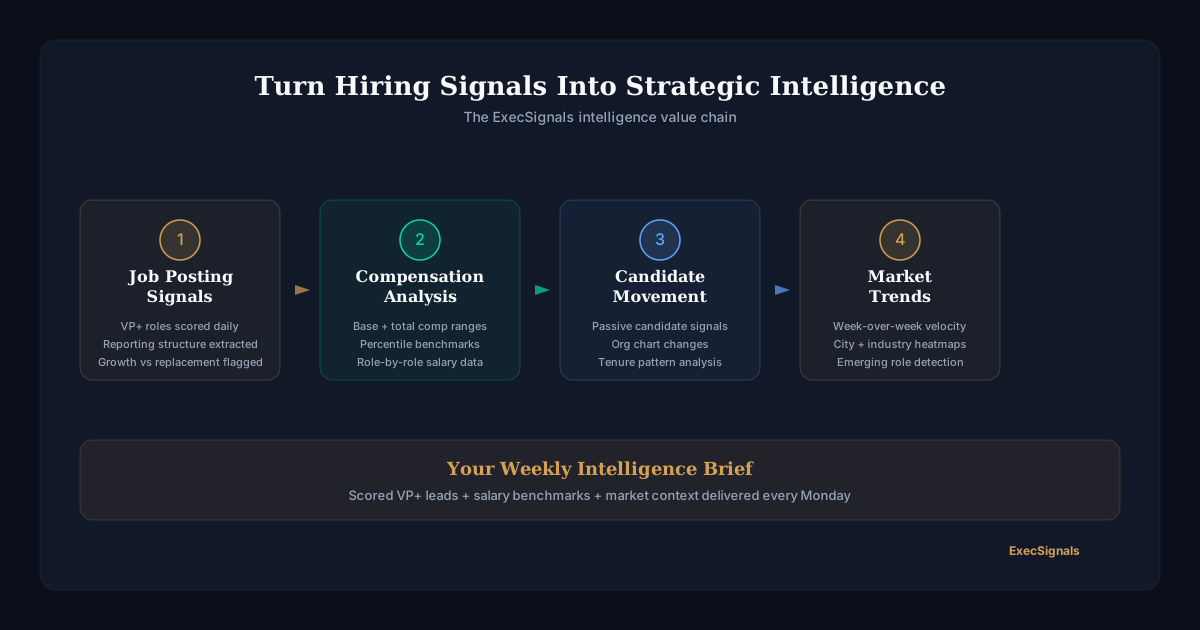
Get healthcare VP+ leads scored weekly
ExecSignals tracks CTO, CIO, VP Engineering, and other technical leadership roles across healthcare every week. Your first week is free.
Send Me the Brief