Healthcare Executive Hiring 2026: VP+ Demand Trends
Healthcare accounts for 19% of all VP+ postings, making it the second-largest sector for executive hiring after technology. But the healthcare executive market has its own dynamics: clinical leadership pathways, regulatory complexity, and a consolidation wave that is reshaping who gets hired and where.
Healthcare VP+ postings increased 12% year-over-year in Q1 2026. The growth is not uniform. Digital health and data leadership roles are surging. Traditional administrative roles are stable. And the geographic concentration is shifting as telehealth, rural health investment, and health system M&A redraw the map.
This report covers the demand trends, compensation benchmarks, and search patterns that executive recruiters need to build or expand a healthcare practice.
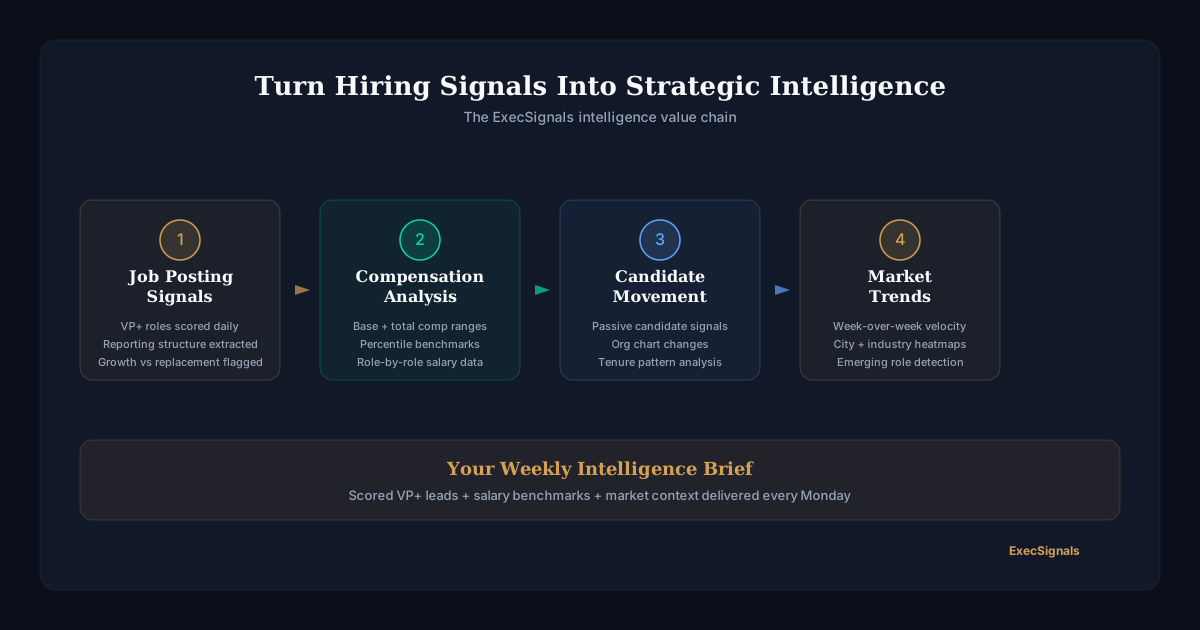
Demand by Role
Healthcare executive hiring breaks into two categories: clinical leadership (roles requiring clinical credentials) and administrative/technology leadership (roles that do not require clinical backgrounds).
Clinical Leadership Roles
- Chief Medical Officer (CMO): Postings up 12% YoY. Demand driven by quality measurement, value-based care, and physician alignment. Requires MD plus administrative fellowship or MBA. Comp: $400K-$600K total.
- Chief Nursing Officer (CNO): Postings up 18% YoY. Nursing workforce crisis is creating CNO demand as health systems invest in nursing strategy at the executive level. Requires DNP or MSN plus operational experience. Comp: $280K-$420K total.
- VP of Medical Affairs: Postings up 8% YoY. Pharmaceutical and biotech companies are expanding medical affairs leadership. Requires MD or PharmD. Comp: $350K-$500K total.
Administrative and Technology Leadership
- Chief Digital Officer: Postings up 35% YoY. The fastest-growing healthcare executive role. Health systems are creating Chief Digital Officer positions to oversee patient experience, telehealth, and digital front-door strategy. Comp: $340K-$480K total. Many hires come from outside healthcare.
- VP of Data/Analytics: Postings up 28% YoY. Value-based care, population health, and AI applications are driving demand for data leadership. Comp: $280K-$400K total.
- COO: Postings up 15% YoY. Health system consolidation creates COO demand as merged entities need operational integration leadership. Comp: $380K-$580K total.
- CFO: Postings up 10% YoY. Margin pressure and revenue cycle complexity are increasing the demand for financially sophisticated CFOs. Comp: $350K-$520K total.
- CIO/CTO: Postings up 14% YoY. EHR optimization, interoperability requirements, and cybersecurity mandates are driving healthcare technology leadership demand. Comp: $340K-$500K total.
Compensation Benchmarks
Healthcare executive compensation varies significantly by organization type. Health systems (especially large academic medical centers) pay the most. Digital health startups pay less in cash but more in equity. Payer organizations fall in between.
Health system C-suite (large, $2B+ revenue):
- CEO: $800K-$1.5M total comp. Top academic medical center CEOs exceed $2M.
- COO: $450K-$650K total comp.
- CFO: $400K-$580K total comp.
- CMO: $450K-$650K total comp (clinical premium).
- CNO: $300K-$450K total comp.
Digital health companies (Series B+):
- CEO: $350K-$550K base + significant equity (1-3%).
- VP Engineering/CTO: $300K-$420K base + equity (0.3-0.8%).
- VP Product: $280K-$380K base + equity (0.2-0.5%).
Healthcare executives transitioning from health systems to digital health typically take a 15-25% base salary reduction in exchange for equity upside. Recruiters facilitating these transitions need to quantify the equity value to make the case for a move.
Talent Flows: Where Healthcare Executives Come From
The talent pipeline for healthcare executive roles is evolving. Key patterns:
Cross-industry hiring is increasing. 35% of healthcare CIO/CTO hires in 2025 came from non-healthcare technology companies. 28% of healthcare CFO hires came from financial services or manufacturing. The trend reflects the growing complexity of healthcare operations and the need for skills that the traditional healthcare pipeline does not always develop.
Clinical-to-administrative transitions are accelerating. More physicians and nurses are pursuing MBA and MHA degrees and transitioning into executive leadership. The CMO-to-CEO pathway is becoming more established, with 18% of health system CEO appointments in 2025 going to candidates with clinical backgrounds.
Consulting-to-operator pathways. McKinsey, Bain, and the major healthcare consulting firms are significant feeder pools for health system COO and strategy roles. Consulting backgrounds are valued for their analytical rigor and strategic thinking, though some health systems report that consultants struggle with the operational pace of healthcare delivery.
Geographic Distribution
Healthcare executive hiring is concentrated in health system hub cities:
- Nashville: 14% of healthcare VP+ postings. Home to HCA Healthcare, Community Health Systems, Acadia Healthcare, and a dense ecosystem of health services and health tech companies.
- New York: 12% of healthcare VP+ postings. Academic medical centers (NYU, Mount Sinai, Columbia) plus a large payer and health tech market.
- Chicago: 8% of healthcare VP+ postings. Major health systems (Advocate Aurora, Northwestern Medicine) and health tech hub.
- Dallas: 7% of healthcare VP+ postings. Growing health system market and corporate headquarters for several national chains.
- Boston: 6% of healthcare VP+ postings. Life sciences and academic medical center concentration.
Remote-eligible healthcare executive roles have increased to 28% of postings, primarily in digital health, health tech, and corporate functions at national health systems. Clinical leadership roles remain almost entirely on-site.
Search Patterns for Healthcare
Healthcare executive searches have unique characteristics that differentiate them from searches in other industries:
Longer timelines. Healthcare VP+ searches average 92 days to fill, 10 days longer than the all-industry average. The additional time reflects credential verification, licensure checks, and the governance approval processes at health systems.
Higher confidentiality requirements. 45% of health system executive searches are confidential, compared to 35% across all industries. The community impact of health system leadership changes, combined with regulatory reporting requirements, makes confidentiality protocols essential.
Board and governance involvement. Health system CEO and CMO searches typically involve board approval, community stakeholder input, and sometimes state regulatory notification. The governance layers add time and complexity but also increase the value of a search firm that understands the process.
Credential verification. Clinical executive candidates require verification of medical licenses, board certifications, malpractice history, and in some cases NPI and Medicare enrollment status. This is not a background check. It is a regulatory requirement that the search firm must facilitate.
Opportunities for Recruiters
The healthcare executive search market is large and growing. Here is where the opportunities are richest:
Digital health leadership. The intersection of healthcare and technology is creating executive roles that did not exist five years ago. Recruiters who can source candidates at this intersection have a significant competitive advantage.
Rural and community health systems. Rural health systems face the most acute executive shortage. They cannot compete on compensation with urban health systems, but they offer quality of life, scope of responsibility, and mission-driven work that attract a specific candidate profile. Recruiters who specialize in this niche face less competition and build deep client loyalty.
PE-backed healthcare services. Private equity investment in healthcare continues to grow: physician practice management, behavioral health, home health, and specialty pharmacy are the hottest segments. Each acquisition generates 2-3 executive searches within 12 months.
The Behavioral Health Expansion
Behavioral health is the fastest-growing sub-sector of healthcare executive hiring. VP+ postings in behavioral health organizations increased 32% year-over-year in 2025, and the trend is accelerating. The drivers are clear: parity legislation requiring insurance coverage of mental health services, corporate investment in employee mental health benefits, and massive PE capital flows into behavioral health platforms.
The executive roles in demand include CEO (for PE-backed behavioral health platforms), Chief Clinical Officer (overseeing treatment quality across multiple locations), VP of Operations (managing multi-site behavioral health networks), and VP of Payer Relations (negotiating reimbursement rates with insurers).
The candidate pool is thin. Behavioral health has historically been a fragmented, small-organization sector. Executives with experience managing large, multi-site behavioral health operations are rare. Recruiters who build networks in this sub-sector early will have a significant advantage as the consolidation wave continues.
Value-Based Care and Executive Demand
The transition from fee-for-service to value-based care is reshaping healthcare executive hiring. Organizations moving to value-based models need leaders who understand population health management, risk-based contracting, and the data infrastructure required to manage patient panels profitably.
New executive roles emerging from the value-based transition include Chief Population Health Officer, VP of Value-Based Care Strategy, and VP of Clinical Analytics. These roles did not exist at most health systems five years ago. They require a blend of clinical understanding, data fluency, and financial modeling that is rare in the healthcare executive pipeline. The recruiter's value is finding candidates who combine these capabilities, often by looking outside traditional health system career paths to consulting, payer, and health tech backgrounds.
Get healthcare VP+ leads every Monday
ExecSignals tracks executive hiring across health systems, digital health, and payers. Your first week is free.
Send Me the Brief