How to Source Passive Executive Candidates: A Recruiter Playbook
85% of qualified VP+ candidates are not looking for a job. That's the math. If your sourcing strategy depends on job boards, applications, and LinkedIn Recruiter sprays, you're fishing in the 15% pond while the real talent swims somewhere else.
Passive candidate sourcing is the core skill of executive search. It's what separates retained search firms from contingency shops, and it's what justifies a $100K+ fee for a single placement. Yet most recruiters approach passive executives the same way they approach active candidates: with a job description and an InMail template.
Here's a better approach, built from patterns across thousands of VP+ placements.
Why Passive Sourcing Matters More at the Executive Level
At the individual contributor level, active candidates are often strong. People change jobs frequently. The job board ecosystem works. But at the VP+ level, the dynamics are different.
Active VP+ candidates are disproportionately people who were recently let go, are in a company that's struggling, or have a pattern of short tenures. There are exceptions, but the base rate holds. The strongest executives are succeeding at their current company, well-compensated, and not scanning job boards.
This means the recruiter's job is to identify people who aren't looking, get their attention, and create enough interest that they're willing to explore. That requires different tools, different messaging, and a different mindset than high-volume recruiting.
Step 1: Build the Target Map Before You Source
The biggest sourcing mistake is starting with LinkedIn and searching by title. That produces a list of 500 names with no prioritization. Instead, start with the target map.
Identify 15-25 target companies. These are companies where the ideal candidate currently works. Work backward from the client's needs: same industry, similar stage, comparable complexity. If the client is a $50M B2B SaaS company hiring a CFO, target CFOs at $30M-$100M SaaS companies. The company list is more important than the candidate list because it focuses your research.
Map the org chart at each target company. LinkedIn, the company website, press releases, and conference speaker lists all help you build the org chart. You need to know who reports to whom. This context is essential for your outreach because it shows the candidate you've done your homework.
Identify the "pull factors." For each candidate, ask: what would make this person consider leaving? Maybe their company just went through a leadership change. Maybe their industry is contracting. Maybe they've been in the role for 4+ years and are plateau-ing. These pull factors inform how you frame the opportunity.
Step 2: The Warm Path (Always Try This First)
Warm introductions convert at 40-60% for VP+ candidates. Cold outreach converts at 3-5%. The math is clear: invest in the warm path before going cold.
Mine your existing network. For every target candidate, check who in your network is connected to them. LinkedIn's "shared connections" feature is the starting point. Your firm's database of placed candidates, references, and client contacts is the deeper source. A placed CFO who worked at a target company five years ago can make an introduction that opens a door no cold message would.
Ask clients for introductions. Clients are often willing to introduce you to people in their network if you explain why. "I'm looking for CFO candidates with healthcare SaaS experience. Who's the best finance leader you've worked with?" This produces warm leads and deepens the client relationship.
Use board members and advisors. Especially for board-level placements, the warm path runs through existing board networks. One board member introduction is worth 100 cold messages.
Step 3: Cold Outreach That Gets Responses
When warm paths are exhausted, cold outreach is necessary. But it needs to be dramatically better than the standard recruiter template.
Lead with market intelligence, not the job. Passive executives don't care about your job description. They care about market context. Open with something the candidate would find useful even if they're not interested in the role. "I've been tracking VP Engineering hires in the healthcare AI space and noticed three patterns that might affect your team's hiring in the next 6 months. Worth a quick call?"
Reference something specific about the candidate. Not "I was impressed by your background." That's what every recruiter says. Reference a specific conference talk, a specific product launch, a specific company milestone. "Your team's migration from monolith to microservices at [Company] last year is the kind of experience my client needs." This proves you did research and aren't blasting 200 people with the same message.
Keep it short. VP+ candidates receive 20-50 recruiter messages per week. Your message gets 5-10 seconds of attention. Three to four sentences. One clear ask: a 15-minute call. No job description attachment. No company name (save the reveal for the call). Short messages get higher response rates than detailed ones because they respect the candidate's time.
Use the right channel. Email outperforms LinkedIn InMail for VP+ candidates by a factor of two. Executives check email constantly. They check LinkedIn sporadically. Finding a direct email address (not the company email; their personal or professional email) takes more work but delivers better results. Tools like Apollo and ZoomInfo can help.
Step 4: The First Conversation
The first call with a passive executive candidate is not a screen. It's a market conversation. Treat it that way and you'll convert more candidates into active consideration.
Share before you ask. Start the call by sharing market intelligence relevant to the candidate's role. Compensation benchmarks, hiring trends in their industry, what competitors are doing. Give value first. The candidate will reciprocate by being more open about their own situation.
Ask about their current situation, not whether they're looking. "Are you open to new opportunities?" is a dead-end question. A passive candidate will say no. Instead: "What's the biggest challenge you're facing in your current role?" or "If you could change one thing about your current situation, what would it be?" These questions surface the dissatisfaction that makes someone open to a conversation.
Don't pitch the job in the first call. If the candidate seems interested in the market conversation, mention that you're working on something relevant and ask if they'd be open to hearing more. This creates a natural second conversation without the pressure of a formal interview. The best recruiters have two calls before they present the specific opportunity.
Step 5: Nurture the Ones Who Say No
A passive candidate who says "not now" is not a dead lead. They're a future candidate and a potential referral source. The best executive recruiters maintain relationships with hundreds of VP+ executives who declined a specific opportunity but remain in their network.
Add value quarterly. Send a relevant article, share a compensation benchmark, or make an introduction to someone in their industry. Don't pitch. Just stay visible. When their situation changes in 6-12 months, you'll be the recruiter they call.
Ask for referrals explicitly. "I understand the timing isn't right for you. Is there someone in your network who might be a fit for this kind of role?" VP+ candidates know other VP+ candidates. A single referral from a well-connected executive can unlock a candidate you'd never have found through research alone.
Measuring Sourcing Effectiveness
Track three metrics to evaluate your passive sourcing program. First, response rate on initial outreach. A well-targeted, personalized message to a passive VP+ candidate should get a 15-25% response rate. Below 10% means your targeting or messaging needs work. Second, conversion from response to conversation. You should convert 50-70% of responses into actual calls. Third, pipeline-to-placement ratio. For retained searches, 8-12 qualified candidates in the pipeline should yield a successful placement.
Build a sourcing dashboard that tracks these metrics by role type, industry, and geographic market. Over time, this data tells you where your sourcing is strongest and where it needs improvement. A recruiter who knows their response rate for VP Engineering candidates in healthcare is 22% but only 8% for CTO candidates in fintech can allocate their time and outreach strategy accordingly.
The BLS Job Openings and Labor Turnover Survey (JOLTS) provides monthly data on executive-level job openings and separations that helps you benchmark the overall market tightness. When JOLTS shows declining executive separations, the passive candidate pool is shrinking and your sourcing effort needs to increase. The SHRM research library publishes annual benchmarks on time-to-fill and cost-per-hire for executive roles.
Combine this approach with signal-based intelligence and geographic market data to build the most complete sourcing operation in your market.
Get your target list started
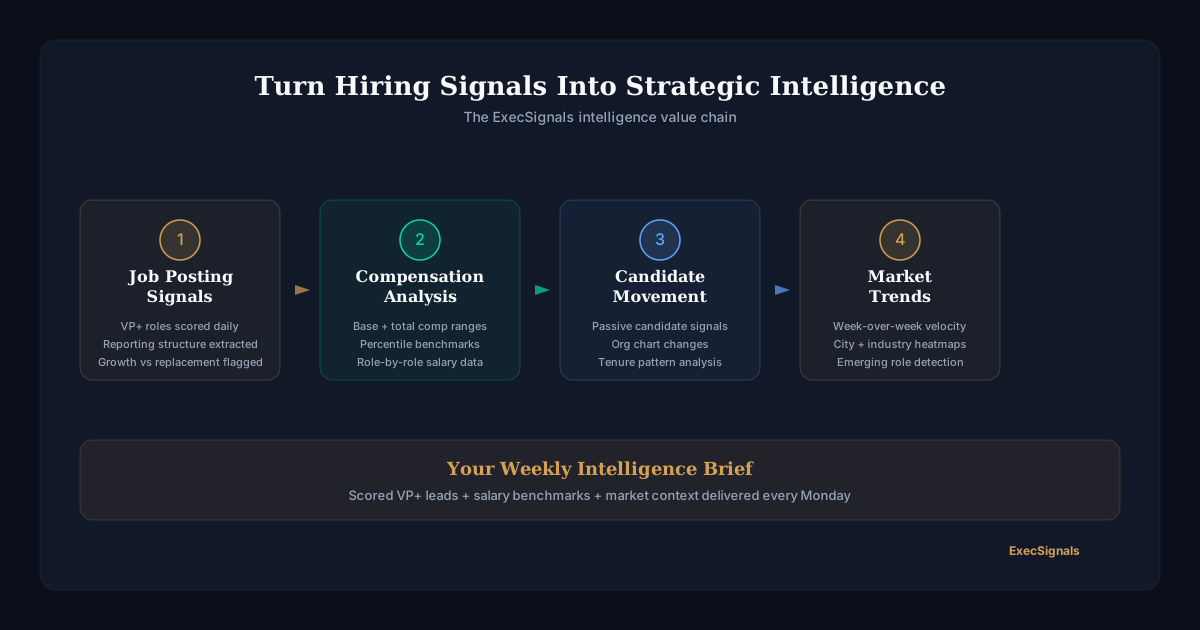
ExecSignals delivers scored VP+ leads every week with company context, reporting structure, and hiring signals. Use it to build your passive candidate target map.
Send Me the Brief