VP Engineering Hiring Signals: What Most Recruiters Miss
VP Engineering is the most frequently mis-sourced executive role in tech. Recruiters who specialize in it need different signals, different sourcing channels, and a different assessment playbook than any other VP role.
VP Engineering sits at the intersection of technical depth and organizational management. It's not a CTO role (that's technical strategy). It's not a Director of Engineering role (that's one team, not the whole function). The VP Engineering owns the people, the process, and the delivery for the entire engineering organization. Finding someone who can do all three is harder than it looks.
ExecSignals tracks hundreds of VP Engineering postings every month. The patterns in that data reveal which companies are about to search, what the best candidates look like, and where most recruiters lose the engagement.
The Signals: When a VP Engineering Search Is Coming
VP Engineering searches are more predictable than most recruiters realize. The organizational signals are visible weeks before the job posts. Here's what to watch for.
Signal 1: Engineering Team Crosses 20 People
There's a threshold where engineering teams break. At 10 engineers, the CTO or a senior engineer can manage the team directly. At 20, the communication overhead becomes unmanageable. Meetings multiply. Shipping velocity drops. Engineers start complaining that they don't know what other teams are building.
This threshold is the single most reliable predictor of a VP Engineering hire. Companies don't hire VP Engineering proactively. They hire when the pain becomes acute. And the pain becomes acute somewhere between 18 and 25 engineers.
Tracking this is easier than it sounds. LinkedIn company pages show employee counts by function. GitHub organization activity reveals team size indirectly. And engineering job postings for IC roles tell you the team is growing. When a company posts three to five software engineer roles simultaneously, count the existing team. If they're approaching 20, a VP Engineering search is 60-90 days away.
Signal 2: New CTO Hire in the Past Quarter
New CTOs almost always bring in their own VP Engineering within six months. The CTO needs someone they trust to manage delivery while the CTO focuses on strategy, architecture, and board-level communication. If the CTO doesn't already have a VP Engineering in their network, the search goes external.
This signal is especially strong when the CTO was hired from outside the company. Internal CTO promotions often keep the existing engineering management structure. External CTO hires restructure it. That restructuring almost always includes a VP Engineering hire.
Cross-reference the CTO hiring data with subsequent VP Engineering postings at the same company. The pattern is consistent across industries and company sizes.
Signal 3: Cluster of Senior Engineer Hires
Companies that hire three or more senior or staff engineers in a 60-day window are building technical depth. But technical depth without engineering management creates chaos. The senior engineers need someone to coordinate their efforts, resolve technical disagreements, and protect their time from meeting overhead.
This cluster signal works best at companies in the 30-80 employee range. Larger companies have enough management infrastructure to absorb senior hires. Smaller companies are still in the "everyone reports to the CTO" phase. The sweet spot is the growth stage where the team is adding technical talent faster than the management structure can support.
Signal 4: Engineering Manager Reporting to CEO
When you see a job posting for an Engineering Manager or Director of Engineering that reports to the CEO, something is off. The CEO should not be managing engineering managers. That's a VP Engineering function. The company knows this, which is why they're hiring for the layer below first. The VP Engineering posting follows.
This signal mirrors the CRO pattern documented in our CRO hiring signals analysis. The leadership layer below the VP is a precursor, not a substitute.
What Makes VP Engineering Hard to Source
VP Engineering is the executive role with the smallest qualified candidate pool relative to demand. The reason is the dual requirement: the candidate must be technically credible and managerially excellent. Most people are one or the other.
The Technical Credibility Problem
Engineers won't follow a VP Engineering who can't evaluate their technical work. This doesn't mean the VP needs to write production code. But they need to understand system architecture, evaluate technical tradeoffs, and recognize when an engineer's proposed approach is brilliant versus reckless. Recruiters who source VP Engineering candidates purely from management backgrounds (MBA plus people management experience) miss this requirement and deliver candidates the engineering team rejects.
The Management Depth Problem
Brilliant engineers who get promoted to VP Engineering and fail is one of the most common patterns in tech. Writing great code and managing an organization of 40 engineers are completely different skills. The VP Engineering needs to handle performance reviews, navigate organizational politics, manage headcount budgets, and make difficult decisions about team structure. Pure technologists rarely have these capabilities.
The ideal VP Engineering candidate has done both: spent meaningful time as an individual contributor (5+ years), then transitioned into management and scaled a team from small to large (from 10 to 50+, or from 50 to 200+). This profile is rare, which is why VP Engineering searches take longer than VP Sales or VP Marketing searches at the same company stage.
Sourcing Channels That Work
LinkedIn InMail is the default sourcing channel for most recruiters. For VP Engineering, it's necessary but insufficient. Here's where the best firms find candidates.
Engineering blogs and conference talks. VP Engineering candidates who write about engineering management on their personal blogs or speak at conferences like LeadDev, QCon, and StaffPlus are self-identifying as management-oriented technologists. These are high-signal sources. A conference speaker who talks about "scaling engineering teams" or "building engineering culture" is telling you they want to be a VP Engineering (or already are one and might be open to a better opportunity).
GitHub organization activity. You can't directly hire someone based on their GitHub profile. But you can identify companies with strong engineering cultures (lots of open-source activity, frequent commits, well-maintained repos) and then target the engineering leadership at those companies. If a company's engineering team is shipping high-quality open source, someone is managing that team well. That someone is your candidate.
Backchannel references from CTOs. The most effective VP Engineering sourcing happens through CTO networks. CTOs know who the best engineering managers are because they've worked with them, been pitched by them, or competed against them for talent. A recruiter who builds relationships with CTOs gets access to referral pipelines that no database can replicate.
Internal promotions at larger companies. Directors of Engineering at 500+ person companies are natural VP Engineering candidates for smaller companies. They've managed at scale but are constrained by the larger org's pace and politics. Pitching them on the VP Engineering role at a fast-growing startup with a clear CTO-to-report-to structure often works. These candidates are visible on LinkedIn and relatively easy to identify.
Compensation Benchmarks
VP Engineering compensation has stabilized in 2026 after the volatility of 2022-2024. Here's where the market sits.
- San Francisco: $320K median base, $600K-$800K total comp with equity
- New York: $295K median base, $500K-$700K total comp
- Seattle: $300K median base, $550K-$750K total comp (Big Tech inflates this)
- Boston: $275K median base, $450K-$650K total comp
- National median: $275K base, $450K-$600K total comp
The equity component varies wildly by company stage. Series B VP Engineering hires receive 0.3-0.8% equity. Series D and later, it drops to 0.05-0.2%. Public company RSU packages add $100K-$300K per year but carry no startup upside. The candidate's risk appetite and career stage determine which comp structure they prefer. Recruiters who can navigate this conversation fluently close faster.
Assessment: How to Evaluate VP Engineering Candidates
The standard interview loop for VP Engineering fails at most companies because it over-indexes on either technical skills or management skills, not both. Here's a balanced assessment framework.
Technical architecture review (90 minutes). Present the company's current architecture to the candidate. Ask them to identify the three biggest risks, the first thing they'd change, and how they'd approach a major technical migration. You're not testing coding ability. You're testing architectural judgment and the ability to prioritize technical work.
Engineering team panel (60 minutes). Let two to three senior engineers interview the candidate directly. This is non-negotiable. If the engineering team doesn't trust the VP Engineering, the hire will fail regardless of management capability. The panel should probe for technical depth, communication style, and willingness to listen.
Management simulation (60 minutes). Present a realistic scenario: two teams are blocked on the same shared service, the most senior engineer just gave notice, and the CEO wants a feature shipped in half the time the team estimated. Walk through how the candidate would handle each issue. This reveals decision-making frameworks, prioritization instincts, and communication approach under pressure.
References (3-5 calls). Talk to people who reported to the candidate, not just their peers or managers. The reports will tell you whether this person can manage. Ask specific questions: "How did they handle performance issues?" "What did they do when the team missed a deadline?" "Would you work for them again?"
Browse more SaaS hiring trends or check the role intelligence pages for current VP Engineering demand data.
Track VP Engineering and CTO searches weekly
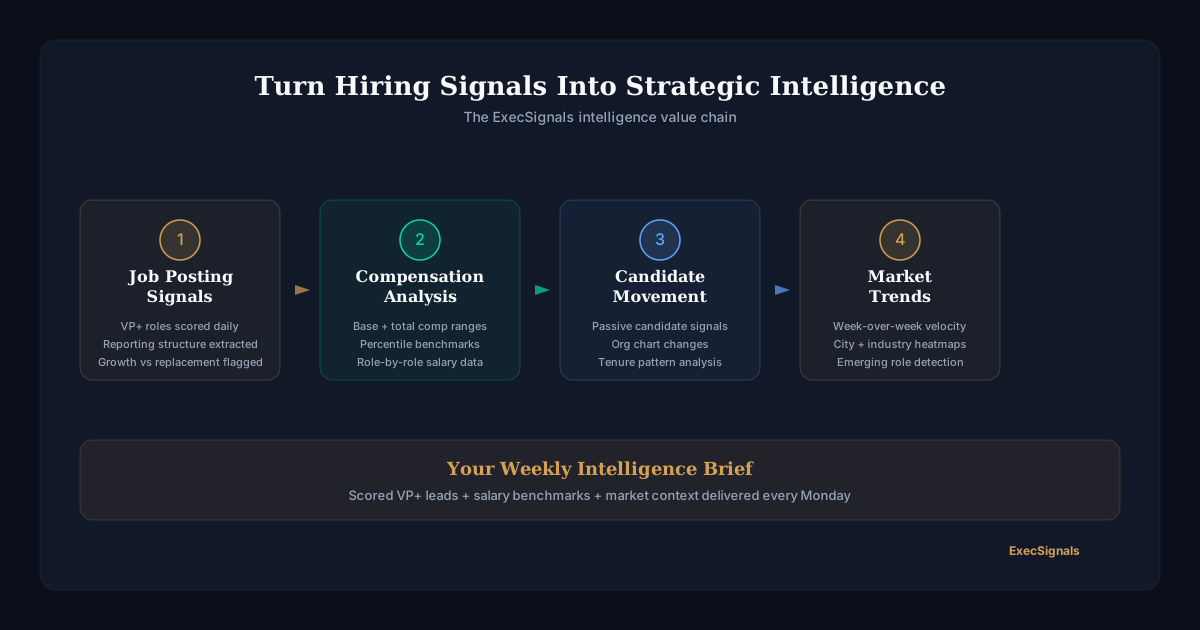
ExecSignals scores technical leadership roles with hiring signals, reporting structure, and salary data every Monday.
Send Me the Brief