VP Finance Hiring Data – 2026
Real-time VP+ hiring intelligence for executive recruiters placing VP Finance roles.
The median VP Finance salary is $248K (P25: $170K, P75: $320K). There are 19 open VP Finance roles this week. The top hiring signal is "Reports to CFO" and the top industry is Financial Services.
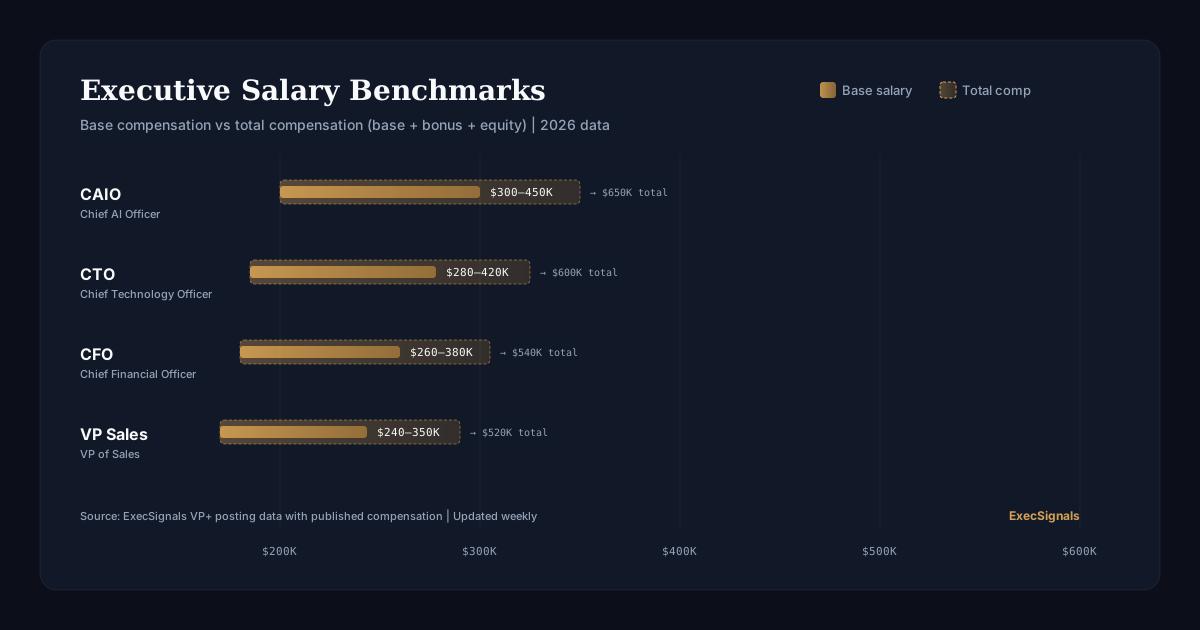
Salary Benchmarks
Based on 19 VP Finance postings with posted compensation this week. These are real numbers from active job postings, not survey estimates or self-reported data. Every figure comes from a role that a company is actively trying to fill right now.
The spread between $170K and $320K tells you something important about this market. A wide range means the role varies significantly by company size, industry, and geography. When the range is narrow, companies have converged on a market rate, which means compensation negotiations will be tighter and the differentiator becomes equity, bonus structure, or the scope of the mandate.
Hiring Signals
The most common signal for VP Finance roles is Reports to CFO. VP Finance roles typically report to the CFO. The top hiring industry is Financial Services.
Hiring signals tell you more than the job title alone. A "Reports to CFO" signal means the company is investing in expansion, not backfilling a departure. These roles tend to come with bigger budgets, more executive support, and a longer runway to deliver results. For executive recruiters, signals like these indicate a higher likelihood of placement success because the company has already committed to the strategic direction.
Signals are extracted automatically from every job description in The Monday Brief. They include growth indicators, team-building mandates, urgency markers, and reporting relationships. The combination of signal and salary data lets you prioritize the roles most likely to close.
What Companies Look For in VP Finance Roles
Companies hiring VP Finance roles typically prioritize candidates with experience in Financial Services. The most common hiring signal is Reports to CFO, which indicates that employers are looking for leaders who can drive immediate results rather than maintain existing operations. Boards and executive committees want proof of measurable outcomes, not just tenure.
This role usually reports to the CFO, meaning the VP Finance is expected to operate as a strategic partner at the highest levels of the organization. That reporting line shapes every aspect of the job: the pace of decision-making, the visibility of successes and failures, and the degree of autonomy granted from day one. Candidates who have worked under similar reporting structures will adapt faster and deliver sooner.
Hiring managers also look for pattern recognition. They want someone who has navigated similar challenges before, whether that means scaling a team, entering a new market, or restructuring an underperforming division. The strongest candidates bring a clear point of view on how to build, not just a track record of managing what already exists.
Compensation Deep Dive
The median VP Finance salary of $248K reflects current market demand across all industries and geographies. The 25th percentile at $170K represents earlier-stage companies, smaller markets, or candidates making a step-up move into the role for the first time. The 75th percentile at $320K is typical for established enterprises, high-cost metros like San Francisco and New York, or candidates with a strong track record of prior exits or measurable revenue impact.
Geography is the single largest variable in executive compensation. A VP Finance in the Bay Area will earn 20-35% more than the same role in a mid-tier metro like Dallas or Atlanta. Company stage matters too. Series B-D startups often offer lower base salaries but supplement with equity that can be worth multiples of the cash gap over a three to five year period. Industry also drives variation. Financial services and software tend to pay above the median, while healthcare and nonprofit roles trend below it. Remote roles add another layer of complexity, as companies set compensation bands based on either the company headquarters or the candidate's home location.
Career Path
Professionals typically reach VP Finance after 8-12 years of progressive experience in their functional area. The most common path runs through director-level roles where the candidate managed a team of at least 10-15 people and owned a P&L or a measurable business outcome. Board-level visibility and cross-functional leadership experience separate candidates who get placed quickly from those who stall in the interview process.
From the VP Finance seat, the next step is usually a C-suite appointment. For those reporting to the CFO, the transition often happens within the same company when the executive above them departs or a new division is created. External moves are also common, particularly for executives who have completed a full cycle at their current company, whether that means a product launch, a market expansion, or a turnaround.
The candidates who command the highest salaries at this level share a few traits. They can point to specific numbers: revenue grown, costs cut, teams built, products shipped. They have operated in environments with real accountability, where missing targets had consequences. And they communicate clearly with boards, investors, and cross-functional peers. Executive recruiters who understand this pattern can match candidates to roles faster and with better outcomes.
How ExecSignals Tracks VP Finance Roles
Every Monday, ExecSignals scans active VP+ job postings, extracts salary data, identifies hiring signals, and scores each lead based on quality indicators. For VP Finance roles specifically, that means you see the 19 current openings ranked by a combination of salary budget, signal strength, and company profile. No manual searching. No boolean queries. No scanning job boards for hours.
The Monday Brief includes an Excel workbook with every scored lead and a PDF one-pager that summarizes the week's market intelligence. Subscribers who focus on VP Finance placements use this data to prioritize their outreach, set compensation expectations with clients, and identify emerging opportunities before competitors see them. The first week is free, with no credit card and no sales call required.
Get scored VP+ leads every Monday
Your first week is free. No credit card, no call.
Send Me the Brief